Vocabulary of Concepts of Ch. 17: Evidence of Evolution
|  | ||||
antibiotic | Metabolic product of soil microbes that kills bacterial competitors for nutrients.  | ||||
| balanced polymorphism | Form of selection in which two or more alleles for a trait are being maintained in a population over time. | ||||
| biogeography | Scientific study of the world distribution of species. | ||||
bottleneck | Severe reduction in the size of a population, brought about by intense selection pressure or a natural calamity. | ||||
| catastrophism | Idea that abrupt changes in the geologic or fossil record were divinely invoked. | ||||
| comparative morphology | Scientific study of comparable body parts of adults or embryonic stages of major lineages. | ||||
| directional selection | Mode of natural selection by which allele frequencies underlying a range of phenotypic variation shift in a consistent direction, in response to directional change or to new conditions in the environment. | ||||
| disruptive selection | Mode of natural selection by which the different forms of a trait at both ends of the range of variation are favored and intermediate forms are selected against. | ||||
| evolution | Genetic change in a line of descent. Outcome of microevolutionary events: gene mutation, natural selection, genetic drift, and gene flow. | ||||
| fitness | Increase in adaptation to environment, as brought about by genetic change. | ||||
| fixation | Loss of all but one kind of allele at a gene locus for all individuals in a population. | ||||
| fossil | Recognizable, physical evidence of an organism that lived in the distant past. | ||||
| founder effect | A form of bottlenecking. By chance alone, a few individuals that establish a new population have allele frequencies that differ from those of the original population. | ||||
| gene flow | Microevolutionary process; alleles enter and leave a population as an outcome of immigration and emigration, respectively. | ||||
| gene pool | All genotypes in a population. | ||||
| genetic drift | Change in allele frequencies over the generations due to chance alone. Its effect is most pronounced in very small populations. | ||||
| genetic equilibrium | In theory, a state in which a population is not evolving. Compare Hardy-Weinberg rule. | ||||
| Hardy-Weinberg rule | Allele frequencies stay the same over the generations when there is no mutation, the population is infinitely large and isolated from other populations of the species, mating is random, and all individuals are reproducing equally and randomly. | ||||
| inbreeding | Nonrandom mating among close relatives that share many identical alleles. | ||||
| lethal mutation | Mutation with drastic effects on phenotype; usually causes death. | ||||
| microevolution | Of a population, any change in allele frequencies resulting from mutation, genetic drift, gene flow, natural selection, or some combination of these.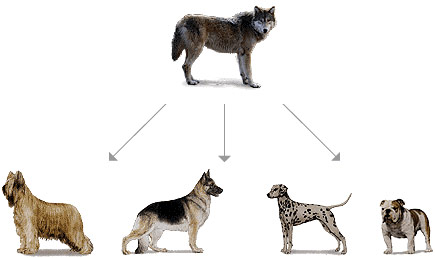 | ||||
| mutation rate | Of a gene locus, the probability that a spontaneous mutation will occur during or between DNA replication cycles. | ||||
| natural selection | Microevolutionary process; the outcome of differences in survival and reproduction among individuals that differ in details of heritable traits. | ||||
| neutral mutation | A mutation with little or no effect on phenotype, so natural selection can't change its frequency in a population. | ||||
| polymorphism | The persistence of two or more qualitatively different forms of a trait (morphs) in a population. | ||||
| population | All individuals of the same species that are occupying a specified area. | ||||
| sampling error | Use of a sample or subset of a population, an event, or some other aspect of nature for an experimental group that is not large enough to be representative of the whole. | ||||
| sexual selection | A microevolutionary process; a type of selection that favors a trait giving an individual a competitive edge in attracting or keeping a mate (favors reproductive success). | ||||
| stabilizing selection | Mode of natural selection by which intermediate phenotypes in the range of variation are favored and extremes at both ends are eliminated. | ||||
| theory of uniformity | Early theory that the earth's surface changes in gradual, uniformly repetitive ways (major floods, earthquakes, and other infrequent catastrophes also occur every year and were not considered unusual). Has since been replaced by plate tectonics theory. |